
It's March 21, 2026. Your phone pings: "Car insurance expires in 7 days. Click here to auto-renew." You're busy with work, stuck in Gomti Nagar traffic, or rushing through Hazratganj errands. So you click "Renew" without reading a single line. Done in 30 seconds.
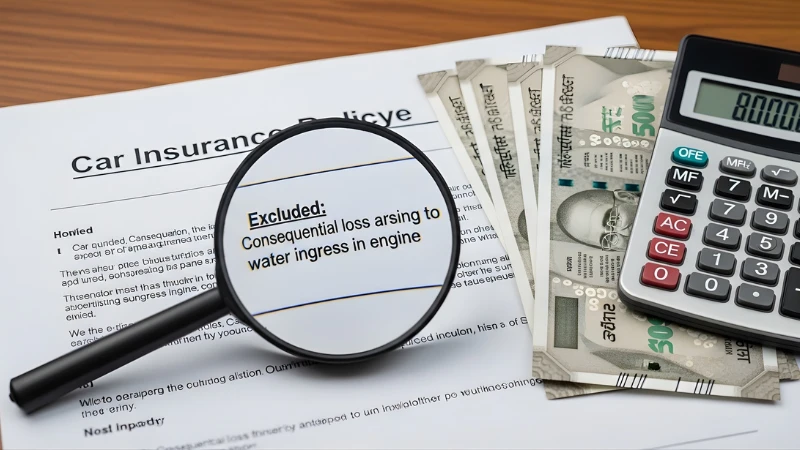
Fast forward three months. Your car gets waterlogged during Lucknow's July monsoon. You file a claim. The insurer says, "Sorry, consequential engine damage not covered. Clause 4.7, page 18." You're stuck with a ₹75,000 repair bill and zero reimbursement.
Sound like a nightmare? This happens to thousands of Indian car owners every single year. According to IRDAI's February 2026 data, nearly 23% of motor insurance claims get rejected — and most rejections trace back to one thing: policyholders never reading those hidden clauses buried in the fine print.
I've been in the insurance business for over two decades, and I've seen brilliant engineers, doctors, and bankers — smart people — lose lakhs because they trusted "auto-renew" blindly. This year, before your renewal date hits (most policies expire in March-April for salaried folks who bought cars post-Diwali or new year), let's break down the five hidden clauses that can make or break your claim. This isn't legal jargon — it's plain talk for Lucknow salaried car owners who deserve better.
Table of Contents
- Why 2026 is THE Year to Stop Auto-Renewing Blindly
- Hidden Clause #1: The Consequential Loss Trap (Biggest Claim Killer)
- Hidden Clause #2: The IDV Depreciation Shock (Why Your Payout is Half What You Expected)
- Hidden Clause #3: The Zero Depreciation Exclusion List (Bumper-to-Bumper... Except These Parts)
- Hidden Clause #4: The NCB Loss Fine Print (Lose Your 50% Discount in ONE Claim)
- Hidden Clause #5: The Personal Accident (PA) Cover Forced Bundling Trap
- The Lucknow Reality Check: Claim Settlement Ratios and Garage Networks You MUST Know
- Beyond Hidden Clauses: Common Claim Rejection Reasons You Can Avoid
- Your 7-Point Pre-Renewal Checklist (Do This Before Clicking "Renew")
- The Bottom Line: Your Insurance, Your Responsibility
- Frequently Asked Questions
Why 2026 is THE Year to Stop Auto-Renewing Blindly
Two big changes happened in Indian motor insurance recently. First, IRDAI tightened claim settlement monitoring in February 2026, releasing detailed insurer-wise performance data. Companies like HDFC ERGO now settle 99% of claims within three months, while some public sector insurers still hover around 90% to 92%. Second, more insurers introduced "repair anywhere" models (like Digit's 6,000+ network), but they also quietly added exclusion clauses to protect themselves from fraud.
Translation? Insurers are settling MORE claims for informed customers, but rejecting MORE claims from uninformed ones. The gap between winners and losers is widening. Your job? Be in the winner's camp.
In Lucknow specifically, with our pothole-filled Sitapur Road, waterlogging-prone Hazratganj underpasses, and chaotic Alambagh intersections, you NEED every rupee of coverage. Let's make sure you get it.
Hidden Clause #1: The Consequential Loss Trap (Biggest Claim Killer)
Here's the situation. Heavy rain hits Lucknow (happens every July without fail). Your Maruti Swift is parked near Gomti Nagar Extension. Water rises. Car submerged halfway. You panic and try cranking the engine to move it. Big mistake.
What Happens
Water enters the engine. You crank it anyway. Piston rods bend. Entire engine seizes. Damage bill: ₹80,000 to ₹1.2 lakh depending on car model.
What Your Policy Says
"Consequential loss arising from insured's action not covered unless Engine Protection Add-on purchased." Most comprehensive policies cover flood damage (natural calamity). But they DON'T cover damage YOU cause by trying to start a flooded engine.

Real Lucknow Example
My client Ramesh from Indira Nagar had his Honda City flooded near Alambagh during the 2024 monsoon. He cranked the engine twice. Claim rejected. Why? The surveyor's report said, "Engine damage consequential to policyholder's action, not direct flood impact." Ramesh paid ₹95,000 out of pocket. His policy? Comprehensive, but without the Engine Protection add-on (costs just ₹800-₹1,500 extra annually).
How to Fix This
When renewing, ASK your insurer, "Does this cover engine damage from water ingress?" If they say comprehensive covers it, ask specifically about consequential loss. Better yet, add Engine Protection Cover. Available from ICICI Lombard, HDFC ERGO, Bajaj Allianz — all have Lucknow networks (ICICI alone has 52 cashless garages here).
What's excluded even with Engine Protection: Manufacturer defects, delayed intimation (you must inform insurer within 24 to 48 hours), using wrong fuel, and not retrieving the car from a waterlogged area promptly.
Hidden Clause #2: The IDV Depreciation Shock (Why Your Payout is Half What You Expected)
IDV stands for Insured Declared Value — the maximum amount your insurer pays if your car is stolen or totaled in an accident. Sounds simple? Here's the trap.
The clause: "IDV calculated as per IRDAI-mandated depreciation schedule." Your 2021 Hyundai Creta bought for ₹14 lakh is now (in 2026) five years old. Depreciation? 50%. IDV? Around ₹7 lakh. Car stolen? You get ₹7 lakh, not ₹14 lakh.
Most people discover this AFTER filing a total loss claim. The shock is brutal.
Depreciation rates (as per IRDAI):
- 6 months to 1 year old car: 5%
- 1 to 2 years: 20%
- 2 to 3 years: 30%
- 3 to 4 years: 40%
- 4 to 5 years: 50%
- Beyond 5 years: Mutual agreement between you and insurer (usually surveyor inspection)
What Salespeople Don't Tell You
When you auto-renew, insurers often set IDV at the MINIMUM permissible (to show you a lower premium). You feel happy saving ₹500 on premium. But if a total loss happens, you're underpaid by lakhs.
Lucknow-Specific Tip
Before renewal, check your car's current market value on platforms like CarDekho, OLX, or even local Aminabad/Yahiyaganj used car dealers. Then NEGOTIATE IDV with your insurer. Set it closer to actual market value. Yes, premium increases slightly (10% to 15% higher), but claim payout matches reality.
Alternative for new cars: "Return to Invoice" (RTI) add-on. If your car is totaled within the first 3 to 5 years, the insurer pays FULL invoice price (showroom price), not depreciated IDV. Costs ₹2,000-₹4,000 extra but saves lakhs. Available with HDFC ERGO, Bajaj General, Digit.
Hidden Clause #3: The Zero Depreciation Exclusion List (Bumper-to-Bumper... Except These Parts)
Zero Depreciation (also called "Bumper to Bumper") is the most popular add-on. Promises: "No depreciation deducted on spare parts during claim." Sounds perfect for new car owners, right?
The hidden truth: Even Zero Dep has exclusions. Most policies say "zero depreciation on ALL parts" but buried in page 12 or 15, you'll find: "Batteries, tyres, and tubes excluded. 50% depreciation applies."
What This Means
Your car's bumper damaged? Fully covered. Plastic fender? Covered. Airbag replacement? Covered. But battery dead in the accident? Tyres damaged? You pay 50% of replacement cost.
Additional Zero Dep Limits Most People Miss:
- Maximum TWO claims per policy year (some insurers offer unlimited for higher premium)
- Not available for cars older than 5 to 7 years (depends on insurer; Digit extends to 7 years)
- Compulsory deductible still applies: ₹1,000 for cars under 1500cc engine, ₹2,000 for above 1500cc
Real Scenario & Action Point
Priya from Aliganj bought Zero Dep for her 2024 Tata Nexon. Minor accident in January 2026 (claim one), bigger accident July 2026 (claim two), then scratch in December. Third claim? Rejected. Policy maxed out. She paid ₹18,000 herself for the third repair.
When renewing Zero Dep, ask:
- "How many claims allowed per year?"
- "Are tyres and battery covered, or excluded?"
- "What's my compulsory deductible amount?"
Most Lucknow insureds I've met can't answer these. Can you?
Hidden Clause #4: The NCB Loss Fine Print (Lose Your 50% Discount in ONE Claim)
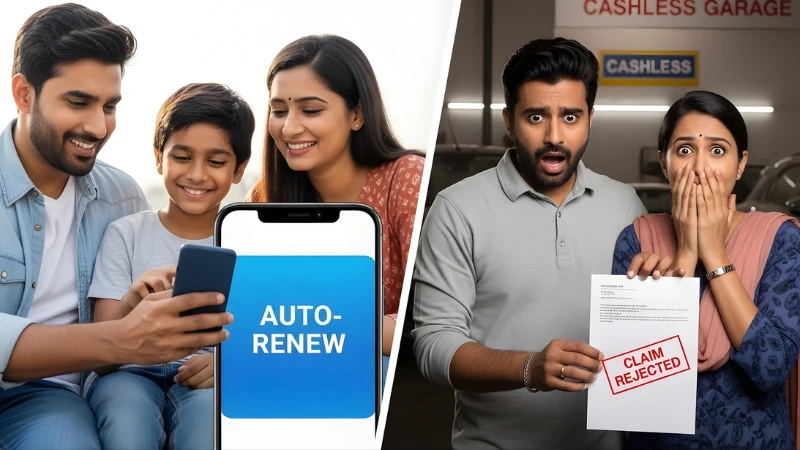
No Claim Bonus is your golden ticket — 20% discount in year two, escalating to 50% by year six if you stay claim-free. On a ₹15,000 own-damage premium, that's ₹7,500 saved annually.
The Clause Everyone Misses
"NCB resets to ZERO if claim made, irrespective of claim amount."
Translation: Tiny scratch repair costing ₹8,000? You claim it. Your NCB (worth ₹7,500 annual discount) vanishes. Next year, premium jumps from ₹7,500 (with NCB) to ₹15,000 (without). You "saved" ₹8,000 on one repair but LOST ₹7,500+ annually for the next five years. Total loss over five years? ₹37,500+.
Smart move: Small repairs under ₹10,000-₹12,000? Pay out of pocket. Preserve NCB. Only claim for BIG damages (₹25,000+).
The NCB Protection Loophole
Many insurers now offer "NCB Protector" add-on (₹1,500-₹2,500 extra). Lets you make ONE or TWO claims per year WITHOUT losing NCB. Sounds great, but read the sub-clause: "NCB protection applies only if total claims don't exceed certain threshold (often ₹50,000 combined)."
Also, NCB is lost entirely in case of total loss or theft — unless you bought NCB Protector specifically covering that scenario (rare).
Lucknow advice: If you drive daily through Gomti Nagar's construction zones or Sitapur Road's truck traffic, NCB Protector is worth it. One claim won't kill your discount. For occasional weekend drivers? Skip it.
Hidden Clause #5: The Personal Accident (PA) Cover Forced Bundling Trap
Since September 2018, IRDAI made Personal Accident cover COMPULSORY with every car insurance policy. Covers owner-driver for death or permanent disability up to ₹15 lakh. Premium? Around ₹750 annually.
Sounds good, right? Here's the catch.
The Clause
"If owner-driver already holds PA cover (standalone or via another motor policy), they can OPT OUT by submitting declaration."
What happens at renewal: Insurer auto-includes PA cover. Premium ₹750 added. You don't notice (it's bundled). You ALREADY have PA cover through your two-wheeler policy or health insurance rider. You're now paying DOUBLE for same coverage.
Real Case & How to Avoid
Suresh from Alambagh renewed his Wagon R insurance in March 2025. PA cover ₹750 added. He already had PA through his bike insurance (same ₹15 lakh). Wasted ₹750. Over ten years of renewals? ₹7,500+ down the drain.
How to avoid: At renewal, ask insurer: "I already have PA cover via [XYZ policy]. Can I submit declaration and remove this?" They'll ask for proof. Submit it. Premium drops by ₹750. Small money, but why waste it?
Word of caution: Don't opt out if you DON'T have alternate PA cover. ₹15 lakh coverage for ₹750 is cheap insurance. Critical for sole earning members of family.
The Lucknow Reality Check: Claim Settlement Ratios and Garage Networks You MUST Know
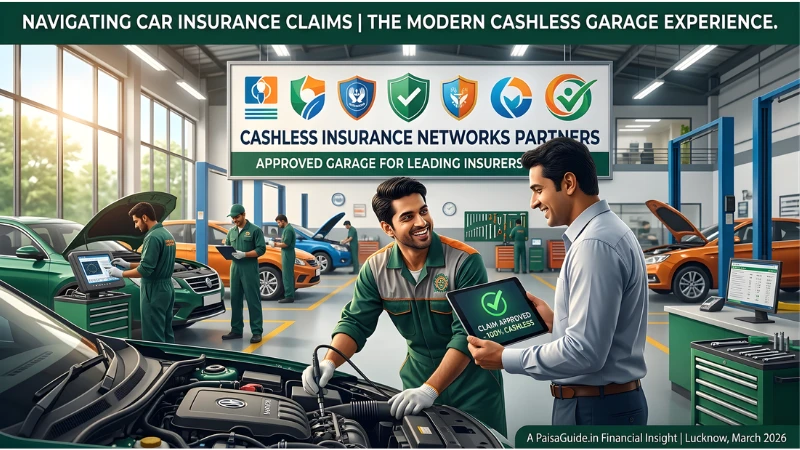
When choosing or renewing car insurance in Lucknow, two numbers matter more than premium: Claim Settlement Ratio and Cashless Garage Network.
Top Performers in 2026 IRDAI Data:
- HDFC ERGO General Insurance: Leads with 99% claim settlement ratio and 7,700+ garages nationwide. In Lucknow? Strong presence across Gomti Nagar, Hazratganj, Indira Nagar.
- ICICI Lombard: Follows at 99% settlement ratio with 6,100+ garages. Lucknow alone has 52 cashless garages including premium ones like Reliance Motors (Faizabad Road, Indira Nagar), Auto Lines (Mirabai Marg), and Kapoor Motors (Kanpur Road).
- Bajaj General Insurance: Reports 98.5% settlement with 4,000 garages. Quick claim settlement, spot claims up to ₹20,000.
- Go Digit: Stands out with "Repair Anywhere" flexibility (6,000 garages) and 96% settlement ratio. 45 cashless garages in Lucknow including Gomti Nagar's GoMechanic centers and Faizabad Road authorized workshops.
- Public Sector Giants: (New India Assurance, National Insurance, United India) range from 90% to 95% settlement, with 3,000+ garages each — but claims processing slower (30 to 45 days average vs 15 to 20 days for private players).
What this means for you: Choosing an insurer with 95%+ settlement ratio AND solid Lucknow network (minimum 15 to 20 garages) ensures smoother claims. You're not hunting for approved workshops post-accident.
Red flag insurers: Those below 90% settlement ratio or with under 10 Lucknow garages. Claim approval hassles multiply.
Beyond Hidden Clauses: Common Claim Rejection Reasons You Can Avoid
Even if you read every clause, claims still get rejected for these avoidable mistakes:
- Driving without valid license or with expired license: Instant rejection, policy voided. Check DL expiry before renewal.
- Driver under influence of alcohol or drugs: Zero coverage. Surveyor will check police FIR, medical reports.
- Undeclared modifications: Added aftermarket CNG kit, spoilers, custom alloys without informing insurer? Claim rejected. Always declare modifications at renewal.
- Delay in intimation: Most insurers mandate 24 to 48-hour claim intimation post-accident. Wait a week? Rejection risk skyrockets.
- Both car keys lost then car stolen: If you lose spare key and don't report it via police FIR, then car gets stolen using that key — claim VOID. Insurer calls it negligence.
- Non-disclosure of facts: Previous accidents, existing damages, modified parts — hiding these voids policy from day one.
Your 7-Point Pre-Renewal Checklist (Do This Before Clicking "Renew")
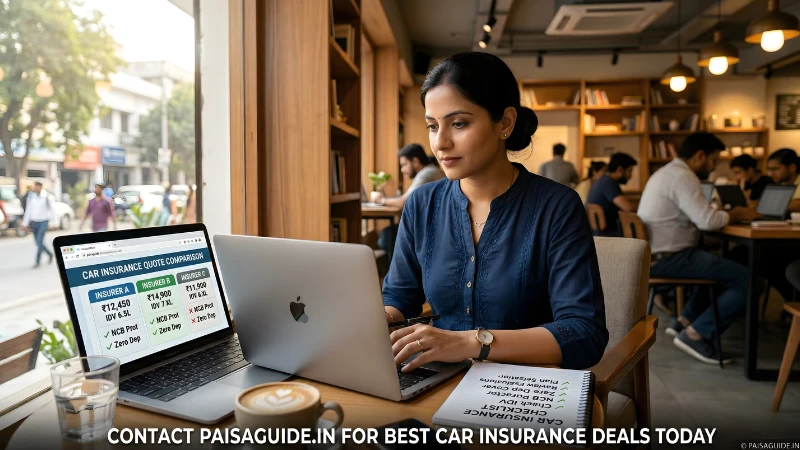
- Point One: Pull out your CURRENT policy document. Read pages 10 to 20 (exclusions section). Highlight anything unclear. Call insurer helpline for explanations.
- Point Two: Check IDV. Compare with current market value (CarDekho, OLX). Negotiate upward if too low.
- Point Three: Add-ons review. Need Zero Dep (car under 5 years)? Engine Protection (monsoon risk in Lucknow)? NCB Protector (frequent driver)? RTI (new car)? Roadside Assistance (highway traveler)? Add only what you NEED.
- Point Four: Verify NCB percentage. Insurers sometimes "forget" to apply your 45% NCB, showing only 25%. Cross-check last year's policy.
- Point Five: Confirm cashless garage list in YOUR area. ICICI shows 52 Lucknow garages, but are any near your Gomti Nagar home or Hazratganj office? Check insurer website garage locator.
- Point Six: PA cover check. Already covered elsewhere? Opt out with declaration.
- Point Seven: Compare quotes from THREE insurers (not just auto-renewing current one). Policybazaar, InsuranceDekho show side-by-side comparisons. Sometimes switching saves ₹2,000-₹4,000 with BETTER coverage.
Total time? 30 to 40 minutes. Potential savings and claim success boost? Lakhs.
Need Help Reviewing Your Policy?
Don't risk a rejected claim. Let us review your current policy and find you the best coverage with the right add-ons.
The Bottom Line: Your Insurance, Your Responsibility
Auto-renewing car insurance is like signing a contract without reading it. You wouldn't do that when buying a house or taking a loan, right? Then why with insurance that could save or cost you ₹50,000 to ₹5 lakh in a single claim?
Indian motor insurance isn't deliberately designed to cheat you. But it IS designed to protect the insurer's interests first. Hidden clauses exist because insurers face fraud daily — fake claims, exaggerated damages, staged accidents. The fine print separates genuine claims from bogus ones.
Your job as a Lucknow salaried car owner? Know those clauses BEFORE you need to claim. Understand what's covered, what's not, and what add-ons bridge the gap. Then renewal becomes strategic, not automatic.
This year, before that auto-renew notification tempts you, spend 40 minutes reading your policy. Check those five hidden clauses we discussed. Adjust IDV, add Engine Protection if needed, verify NCB, review exclusions. Make renewal a conscious choice, not a lazy click.
Your future self — standing at a cashless garage watching your car get fixed with ZERO bill — will thank you.
Is your car fully protected this year?
Drop us a message with your current policy details. We'll help you secure the right add-ons, preserve your NCB, and find the best premium.
Message on WhatsAppDisclaimer: This is educational content for Indian car owners, not personalized insurance advice. Policy terms vary by insurer and state. Always read your specific policy document and consult licensed insurance advisors like me for individual situations.
Frequently Asked Questions
What is "consequential loss" and why is it often rejected in car insurance?
Consequential loss refers to damage that occurs as a secondary result of an insured event, specifically due to the policyholder's actions. For example, if your car is waterlogged during a flood (insured event) and you try to crank the engine, leading to engine seizure, the engine damage is "consequential" to your action. Standard comprehensive policies cover the direct flood damage but typically exclude this self-inflicted engine damage. You need an "Engine Protection" add-on to cover it.
How can I ensure my IDV (Insured Declared Value) is fair at renewal?
Don't blindly accept the insurer's auto-calculated IDV. Before renewal, research your car's current market value on platforms like CarDekho or OLX. Then, negotiate with your insurer to set the IDV closer to this actual market value. While this might slightly increase your premium, it ensures a more realistic payout in case of total loss or theft. For new cars, consider the "Return to Invoice" add-on.
Are tyres and batteries covered under Zero Depreciation car insurance?
Typically, no. Despite being called "bumper-to-bumper," most Zero Depreciation add-ons explicitly exclude consumables like tyres, tubes, and batteries from 100% depreciation cover. Usually, a 50% depreciation still applies to these parts. It's crucial to check the specific policy document for these exclusions.
How many claims can I make with an NCB Protector add-on without losing my No Claim Bonus?
An NCB Protector add-on usually allows for one or two claims per policy year without affecting your No Claim Bonus. However, there's often a sub-clause stating that the NCB protection only applies if the total claim amount does not exceed a certain threshold (e.g., ₹50,000 combined). Always confirm these specific limits with your insurer when purchasing the add-on.
Can I opt out of the compulsory Personal Accident (PA) cover in my car insurance?
Yes, if you already have a Personal Accident (PA) cover of at least ₹15 lakh (either standalone or through another motor or health insurance policy), you can opt out of the compulsory PA cover bundled with your car insurance. You will need to submit a declaration or proof to your insurer to remove this component and save the associated premium (usually around ₹750 annually).
Why is a high Claim Settlement Ratio important, and what's a good benchmark?
A high Claim Settlement Ratio (CSR) indicates how many claims an insurer settles out of the total claims received. A higher CSR (95% or above) means the insurer is more likely to approve your claim. This translates to a smoother, faster, and more reliable claim experience. IRDAI data (like February 2026 mentioned) shows leading private insurers settling over 99% of claims, while public sector insurers might be slightly lower. Aim for an insurer with at least a 95% CSR.

Written By
Amit Kumar Dwivedi
AMFI Registered Mutual Fund Distributor (ARN-139499). Helping families in Lucknow build wealth and secure their assets through Mutual Funds, Insurance, and smart planning.