

Lucknow Family Money Plan 2026: The Ultimate Guide to Insurance, SIPs & Smart Loans
Table of Contents
- Key Takeaways for Your 2026 Lucknow Money Plan
- Introduction
- Life in Lucknow 2026: Why Your Old Plan Is Not Enough
- Step 1: Build "Suraksha" (Protection) – The Foundation
- Step 2: Smart Mutual Fund SIPs – The "Nivesh" Strategy
- Step 3: Loans & Liabilities – The Silent Wealth Killer
- Step 4: "No-Go" Mistakes to Avoid in 2026
- Conclusion: Your 2026 Action Plan
- Frequently Asked Questions
Key Takeaways for Your 2026 Lucknow Money Plan
- Prioritize Protection: Secure robust health insurance (₹10-20 Lakh floater) with a strong local cashless network and a pure term life plan (15-20x annual income).
- Smart Nivesh (Investment): Embrace equity SIPs through a diversified "Thali" method (50-60% Large/Flexi Cap, 25-30% Mid Cap, 15-20% Small Cap) to beat inflation for long-term goals like education.
- Optimize Loans: Actively review and balance transfer home loans to lower interest rates. Consolidate high-interest personal loans and credit card debt.
- Avoid Wealth Traps: Steer clear of high-commission, low-return "investment-cum-insurance" plans, stopping SIPs during market downturns, and relying solely on illiquid real estate for retirement.
- Discipline is Non-Negotiable: With the New Tax Regime, personal financial discipline for saving and investing has become paramount.
Introduction
I met with an existing client recently who looked visibly stressed. "Sir, petrol mehenga, school fees mehengi, EMI bhi chal rahi hai… phir news bol rahi hai small-cap funds toot gaye. Insurance wala bol raha hai ‘guaranteed plan le lo’. Kya karein?"
If you are from a middle-class family in Lucknow, this conversation probably sounds familiar.
The year 2026 is very different from the days when a simple LIC endowment policy, a PPF account, and one flat in Lucknow were considered "complete financial planning". Today, we are dealing with high local inflation, changing tax slabs in the New Tax Regime, SEBI’s strict stress tests on mutual funds, and new IRDAI rules for insurance claims. The old "rule-of-thumb" advice no longer works.
This comprehensive guide is a practical, ground-reality roadmap based on what actually works for families in Lucknow today. It moves beyond generic internet advice to give you specific, actionable strategies for your Investments, Insurance, and Loans.
Life in Lucknow 2026: Why Your Old Plan Is Not Enough
One harsh reality that many families ignore is that Lucknow's expenses are rising faster than the national average. Recent data often shows Uttar Pradesh’s inflation running higher than all-India numbers. On the ground in Lucknow, this manifests in three critical areas:
1. The "Education & Health" Inflation Trap:
Good private schools in the city are hiking fees by 8–10% annually. Similarly, medical treatment in private hospitals across the city is becoming significantly more expensive every year. A surgery that cost ₹1 Lakh five years ago now costs ₹2 Lakh.
2. The Tax Regime Shift:
The New Tax Regime (FY 2025–26) has fundamentally changed how we save. It has removed the forced discipline of Section 80C investments for many salaried employees.
- The Good News: You have more money today.
- The Bad News: There is no "taxman" forcing you to save. The discipline to invest for your future must now come from you.
3. The "Lifestyle" Cost:
Rents and property prices in Lucknow’s developing hubs are climbing. If your income grows at 7–8% but your lifestyle expenses inflate at similar rates, simple "Bachat" (savings in a bank account) will not protect your future. You need "Nivesh" (Investment) that beats inflation.
Step 1: Build "Suraksha" (Protection) – The Foundation

Before we talk about making money (SIPs), we must ensure you don't lose money. In my experience with clients, the financial damage from a single critical illness or a major accident is often larger than three years of "bad" mutual fund returns.
Health Insurance: The Cashless Reality in Lucknow
Most middle-class families in Lucknow today prefer private hospitals for emergencies. However, having a policy is not enough; you need a policy that works here.
Major insurers like Digit, HDFC Ergo, and Care have strong cashless networks in Lucknow. They have tie-ups with many top multi-specialty hospitals across the city.
The "PaisaGuide" Advice:
- Check the Network: Choose a policy where the hospitals near your home are in the cashless network. Don't just look at the premium; look at the hospital list.
- Coverage Amount: For a typical family (Couple + 2 Kids), a ₹10 Lakh to ₹20 Lakh floater cover is the bare minimum today given medical inflation.
- Room Rent Limits: Avoid policies with "Room Rent Capping." If your policy has a 1% cap, and you take a room costing ₹8,000, you will end up paying a huge chunk of the entire bill from your pocket.
Term Life Insurance: Keep it Pure
The biggest mistake I see in 2026 is people still buying "Investment-cum-Insurance" policies.
- The Trap: Traditional endowment plans often give 4–5% returns. In a state with 7% inflation, these plans actually reduce your purchasing power over time.
- The Strategy: Buy a Pure Term Plan.
- The Math: You need coverage of 15–20 times your annual income. If you earn ₹10 Lakh a year, you need a cover of ₹1.5 Crore to ₹2 Crore. This ensures your family can survive comfortably if you are not there.
Motor Insurance: Don't Be "Penny Wise, Pound Foolish"

In Lucknow, traffic is unpredictable, and monsoon waterlogging is a real issue in many localities.
- The Mistake: Many car owners buy "Third-Party Only" insurance for a ₹5 Lakh car just to save ₹2,000 in premium.
- The Consequence: If a rickshaw scratches your car or floodwater enters your engine, you pay ₹50,000+ from your pocket.
- The Fix: Always buy Comprehensive Cover with Zero-Depreciation and Engine Protection add-ons. It costs slightly more but saves you lakhs in repairs.
Step 2: Smart Mutual Fund SIPs – The "Nivesh" Strategy
With the "Suraksha" in place, we move to wealth creation. With the new tax regime leaving more cash in hand, the responsibility to plan for retirement and education falls squarely on you.
How Much SIP Does a Lucknow Family Need?
Let’s look at the math for a common goal: Your child's higher education.
- Current Cost: A good private degree costs approx ₹20 Lakh today.
- Future Cost: With 8–10% inflation, this will cost approx ₹43 Lakh in 10 years.
- The SIP Required: To reach this goal, you might need a balanced equity SIP of ₹12,000–₹15,000 per month.
If you rely on FDs or traditional policies, you will likely fall short by 40-50%. This is why Equity Mutual Funds are essential.
The "Thali" Method for Portfolio Allocation
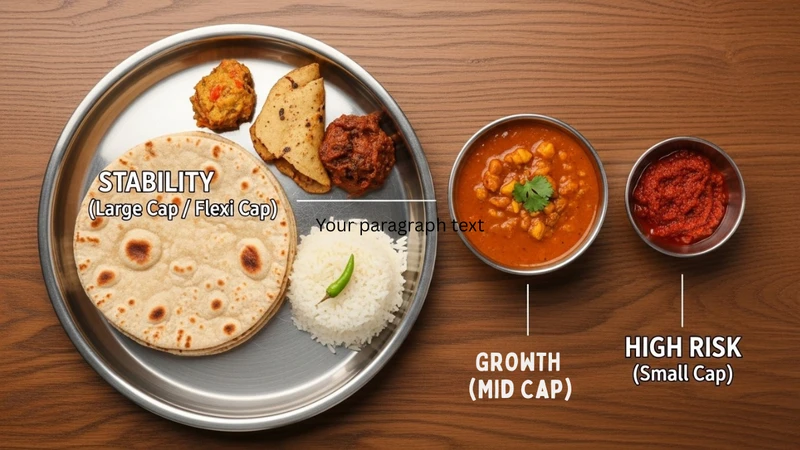
Investors often ask me: "Sir, Small Cap fund ne 40% return diya hai, saara paisa wahi laga dein?" My Answer: No. Think of your portfolio like a traditional Indian Thali:
- Large Cap / Flexi Cap Funds (The Roti/Rice): This is your staple diet. It provides stability. 50-60% of your money should be here. These funds invest in India's biggest companies (like Reliance, HDFC, TCS) that can survive any economic storm.
- Mid Cap Funds (The Sabzi): This adds flavor and growth. Allocate 25-30% here. These are tomorrow's future leaders.
- Small Cap Funds (The Achar/Pickle): A little bit is great for taste (high returns), but too much will burn your stomach (high risk). Limit this to 15-20%, and only if your goal is more than 7 years away.
Warning for 2026: SEBI has introduced "Stress Tests" for Mid and Small Cap funds to warn investors about liquidity risks. Do not ignore these. If a fund takes 30 days to liquidate its portfolio, it is a high-risk bet. Always consult a distributor (ARN-139499) before entering these funds.
Step 3: Loans & Liabilities – The Silent Wealth Killer
Financial planning is not just about assets; it is also about liabilities. Many families in Lucknow are trapped in a cycle of high-interest loans.
Home Loans: The Balance Transfer Trick
If you took a Home Loan 3-4 years ago, you might be paying an interest rate of 9.5% or higher.
- The Check: Check the current rates offered by leading banks (often around 8.3% - 8.6% for good CIBIL scores).
- The Action: If the difference is more than 0.5%, consider a Balance Transfer. On a ₹30 Lakh loan for 20 years, a 0.5% reduction can save you nearly ₹2.5 Lakh in interest.
Personal Loans & Credit Cards
Avoid treating Credit Cards as "extra income." Interest rates on outstanding balances can be 36-40%. If you have multiple small loans, consult a financial advisor to consolidate them into a single, lower-interest loan (like a Loan Against Property or a Gold Loan) to reduce your monthly EMI burden.
Step 4: "No-Go" Mistakes to Avoid in 2026
Over 25 years of advising clients, I have seen these specific mistakes destroy wealth repeatedly.
1. High-Commission Insurance Traps
Avoid 20-year endowment policies that promise "Guaranteed Returns." These usually offer 4–5% returns (IRR). In a state with 7% inflation, these products effectively reduce your wealth's purchasing power over time. They are great for the agent's commission, but terrible for your retirement.
2. Stopping SIPs During Market Corrections
When the market falls, human nature says "Stop!" But financial logic says "Buy!" When the market is down, your SIP buys more units at a cheaper price. This is called Rupee Cost Averaging. Stopping your SIP in a crash is like refusing to buy vegetables when they are at a 50% discount.
3. Real Estate Overconfidence
"Ek flat hai to retirement ho jayega." While owning a home is great, relying solely on property is risky. Real estate is illiquid—you cannot sell a "bedroom" if you need ₹5 Lakh for a medical emergency. You need the liquidity of Mutual Funds and the safety of Insurance alongside your property.
Conclusion: Your 2026 Action Plan
Don’t chase the "Best Product of 2026." Instead, build a simple, boring system that works.
A Sample Plan for a 35-Year-Old Couple in Lucknow:
- Suraksha: ₹1.5 Crore Term Plan + ₹20 Lakh Health Floater (with local cashless network).
- Bachat: Keep 6 months of expenses in a Bank FD or Liquid Fund for emergencies.
- Nivesh: Start a ₹40,000 monthly SIP allocated across Flexi-cap (50%), Mid-cap (30%), and Small-cap (20%).
- Review: Sit with your advisor annually to adjust for inflation and tax changes.

Consistency is the key to wealth. If you need help structuring this plan, consult a professional distributor who understands your personal financial situation and the local Lucknow market.
Frequently Asked Questions
Why is my old financial plan not enough for Lucknow in 2026?
Lucknow faces higher-than-average inflation, especially in education and healthcare. The New Tax Regime removes forced savings discipline (80C), and rising lifestyle costs demand active investment strategies that beat inflation, unlike traditional savings.
What is the recommended health insurance coverage for a Lucknow family?
For a typical family (couple + 2 kids), a floater cover of ₹10 Lakh to ₹20 Lakh is recommended. Crucially, ensure the policy has a strong cashless network with hospitals near your home in Lucknow and avoid policies with room rent capping.
How should I allocate my SIPs using the "Thali" method?
Allocate 50-60% to Large Cap/Flexi Cap Funds (for stability), 25-30% to Mid Cap Funds (for growth), and limit Small Cap Funds to 15-20% (for high returns with higher risk), especially if your investment horizon is over 7 years. Always be mindful of SEBI's stress test warnings for mid and small-cap funds.
What are the biggest mistakes Lucknow families make with insurance and investments?
Common mistakes include buying high-commission, low-return "investment-cum-insurance" policies, stopping SIPs during market corrections (which is when you should buy more units), and over-relying on illiquid assets like real estate for all financial goals.
How can I save money on my Home Loan in Lucknow?
If your current home loan interest rate is 0.5% or more higher than prevailing market rates (currently around 8.3%-8.6%), consider a balance transfer to another bank. This can save you lakhs in interest over the loan tenure.
Is it necessary to consult a financial advisor for my plan?
Yes, especially since generic advice often doesn't account for local inflation, specific market conditions, and your personal financial situation. A professional distributor (like ARN-139499 mentioned) can help tailor a plan that works for you in the Lucknow context.

Written By
Amit Kumar Dwivedi
AMFI Registered Mutual Fund Distributor (ARN-139499). Helping families in Lucknow build wealth through SIPs and smart planning.